Sewerage Pretreatment
What is the Pretreatment Department?
The Pretreatment Department is responsible for identifying, eliminating, controlling, or reducing the discharge of harmful pollutants discharged into the sanitary sewer collection system from homes, commercial buildings, and industrial facilities, before the pollutants enter the wastewater treatment plant.
Are you a business in Orleans Parish? Click here for more information.
What does this mean for you?
Many of the items that end up in our pipes can lead to clogs, or even break a sewer line if enough pressure builds up. This can create sanitary sewer overflows (SSOs) in our neighborhoods, which are costly to clean and repair. Remember…
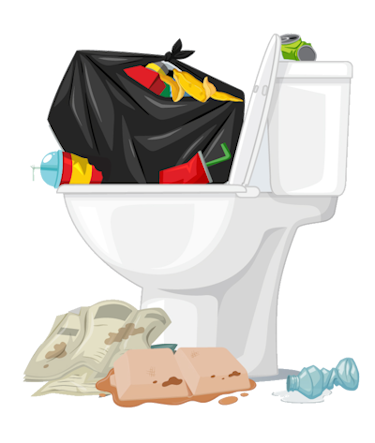
TOILETS ARE NOT TRASHCANS!
"Flushable" wipes DO NOT break down like regular toilet paper.
Please only flush the 3 P's:
- Poop
- Pee
- Paper (Toilet)
DO NOT FLUSH
| Hair | Medications |
| Diapers | Gum Wrappers |
| Paper Towels | Flushable Wipes |
| Tissues | Dental Floss |
| Cotton Swabs | Cigarettes |
| Baby Wipes | Cotton Balls |
| Cleaning Wipes | Kitty Litter |
| Bandages | Women's Hygiene Products |
| Makeup Remover Wipes | Facial Cleansing Pads |
Did you know that "flushable" isn't a regulated term? That means that you can claim a product is flushable even if it can cause clogs in your pipes. So-called flushable wipes really aren't flushable – they don't break down in the pipes and can cause costly plumbing issues for you and your family!

Fats, oils, and grease (FOG) come from meat fats, cooking oil, shortening, lard, butter, margarine, gravy, mayonnaise, salad dressings, sour cream, and other products.
FOG in our pipes clings to materials like wipes that have been flushed or roots that have entered sewer pipes underground, creating clogs. These clogs can cause sewer pipes to break, bringing untreated wastewater back up into homes and businesses or into our neighborhoods. When manholes overflow into parks, yards, streets, and storm drains, FOG and bacteria can contaminate local waters, including drinking water. Exposure to untreated water is a serious health hazard.
Communities spend BIG every year unplugging or replacing grease?blocked pipes, repairing pump stations, and cleaning up costly wastewater spills.
The best way to avoid these costly issues is to keep FOG out of the drains — remember to COOL IT, CAN IT, AND TRASH IT.
Keeping FOG, wipes, and other items out of our pipes helps everyone and protects our canals, Lake Pontchartrain, and the river, too.
Resources
Map of Oil and Grease Drop Off Sites
List of Oil and Grease Drop Off Sites
Used Cooking Oil and Used Motor Oil Drop-off Site:
New Orleans Recycling Drop-off Center
2829 Elysian Fields Ave
New Orleans, LA
Hours: Sat 8:00am – 1:00pm, for New Orleans residents only.
NOTE: Used motor oil can only be dropped off on Household Hazardous Waste days. Used cooking
oil can only be dropped on Used Cooking Oil Disposal days. Dates change annually – check their
website for upcoming special recycling dates.
Used Cooking Oil Drop-off Site:
Big Easy Biofuel
105 Lauren Dr
Belle Chasse, LA 70037
Phone: 504-919-6699
Hours: Mon-Fri 9:00am – 5:00pm
*Drop-off during business hours, containers and pick-up service available for larger
quantities.
Used Motor Oil Drop-off Sites:
Eagle Tire Service and Oil Change
3737 S. Claiborne Ave
New Orleans, LA 70125
Phone: 504-301-7958
Hours: Mon-Sat 7:00am – 6:30pm | Sun 8:30am – 5:30pm
Firestone Complete Auto Care
Multiple Locations
SpeeDee Oil Change and Auto Service
Multiple Locations
Take 5 Oil Change
Multiple Locations
Tim's Quality Car Care
320 N Salcedo St
New Orleans, LA 70119
Phone: 504-831-7450
Hours: Mon-Fri 7:30am – 5:00pm
Tire Town Auto Service
4020 Old Gentilly Rd
New Orleans, LA 70126
Phone: 504-949-2703
Hours: Mon-Fri 8:00am – 5:00pm | Sat 8:00am – 1:00pm
Valvoline Instant Oil Change
1735 St Charles Ave
New Orleans, LA 70130
Phone: 504-561-4161
Hours: Mon-Fri 7:30am – 7:00pm | Sat 7:30am – 6:00pm | Sun 9:00am – 5:00pm
Information for Commercial Customers
Grease Traps 101
Grease traps are required for all Food Service Establishments (FSEs). This includes restaurants, bakeries, grocery stores, delis, convenience stores, coffee shops, and snowball stands, as well as any facilities preparing and servicing food like bars, schools, churches, hospitals, daycares, and nursing homes. Each facility is required to apply for a Fats, Oil and Grease (FOG) permit with the SWBNO Environmental Affairs Department, Pretreatment Section. The cleaning frequency of traps is determined by the percentage of grease and solids that accumulate in the trap. At a minimum, traps should be cleaned every 90 days.
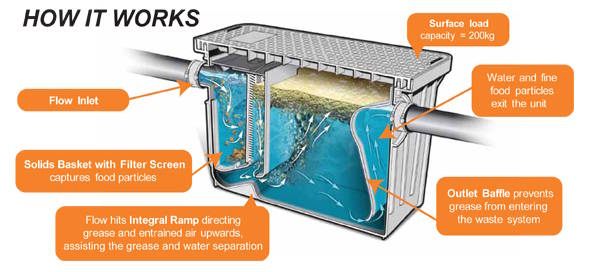
Companies authorized to inspect and certify grease traps and/or interceptors for permit issuance:
- Acme Oil Recycling, LLC (601) 746-9138 or (504) 352-3388
- BROVAC Environmental Service (504) 905-6864
- Crescent Environmental Services LLC (504) 505-2091
- DARPRO Solutions (800) 536-9804
- Flo More Sewer Services, LLC (985) 320-4949
- Liquid Environmental Solutions of Texas, LLC (504) 466-5995
- Rebirth Bio-Fuels (985) 250-0054
- Safeway Used Oil and Grease (504) 650-3195
If you would like your company to be added to the list, please contact the Environmental Affairs Department – Pretreatment Section for more information. Call 504-942-3856 Mon-Fri 8:00am – 4:00pm.
Documents and Applications
Application to DischargePDF
Industrial and other large commercial users may be required to obtain a pretreatment discharge permit. Contact the Environment Affairs Pretreatment Section to determine if your business needs this type of permit to operate in Orleans Parish.
Waste Hauler Permit ApplicationPDF
All Waste Haulers cleaning grease traps in Orleans Parish are required to obtain a Waste Hauler Permit. Additional requirements include training and certifying all personnel cleaning the grease traps.
Food Service Establishment (FSE) Grease Trap Interceptor Discharge Permit Application and InstructionsPDF
All restaurants, bakeries, grocery stores, delis, convenience stores, coffee shops, and snowball stands, as well as any facilities preparing and servicing food including bars, schools, churches, hospitals, daycares, and nursing homes that operate in Orleans Parish are required to obtain a Grease Trap Interceptor Discharge Permit.
Pretreatment Enforcement Response PlanPDF
Under the requirements of 40 CFR 403.B(f) (5), Industrial Pretreatment Program Control Authorities are required to identify, document and respond to industrial pretreatment violations of Section 16.2-4 of the Sewerage and Water Board of New Orleans Plumbing Code.
Pretreatment Ordinance Section 16.2-16.4PDF
Rules governing discharges into the public sanitary sewerage system.
New F.O.G. Ordinance Section 16.5PDF
Rules governing discharges of fats, oils, grease in the public sanitary sewerage system.
State Plumbing Board of Louisiana searchable Plumbers Roster
Contact Us
Mailing Address
Sewerage & Water Board of New Orleans
Environmental Affairs Department – Pretreatment Section
2900 People Avenue Room 215
New Orleans, LA 70117
Phone: (504) 942-3856
Fax: (504) 942-3858